
OUR STORY
A History of Community
Highpoint’s roots trace back to Newburgh’s earliest faith and civic institutions. Methodism first arrived in the city in 1786, and by the mid-19th century, a growing congregation led to the construction of Trinity Methodist Church at 245 Liberty Street. Designed in the Gothic Revival style by architect Rembrandt Lockwood, the landmark masonry church—dedicated in 1861—featured a soaring 180-foot spire and showcased the craftsmanship of local artisans who helped shape Newburgh’s built environment.
Over the decades, the church expanded to include classrooms, gathering spaces, and community facilities, serving hundreds of members and children. Its most recent steward, the First United Methodist Church, was home to a predominantly Black congregation that provided generations of Newburgh residents with service, fellowship, and care.

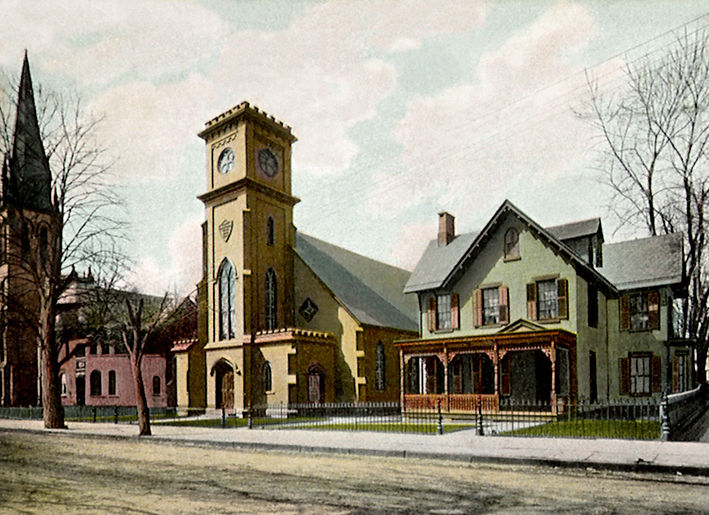
Next door, 257 Liberty Street was constructed in 1866 as the parsonage for the neighboring Calvary Presbyterian Church. Also designed in the Gothic Revival style, the brick building later housed city offices and community organizations, including the Newburgh Youth Corps and the Newburgh Community Action Committee, before sitting vacant for nearly forty years.
In 2020, RUPCO began restoring both historic buildings, reimagining them as a shared cultural and community hub. Renamed Highpoint for its stature, the campus was completed in 2023 and now spans an entire city block and 17,000 square feet, continuing a long tradition of community, connection, and collective care in the City of Newburgh.